
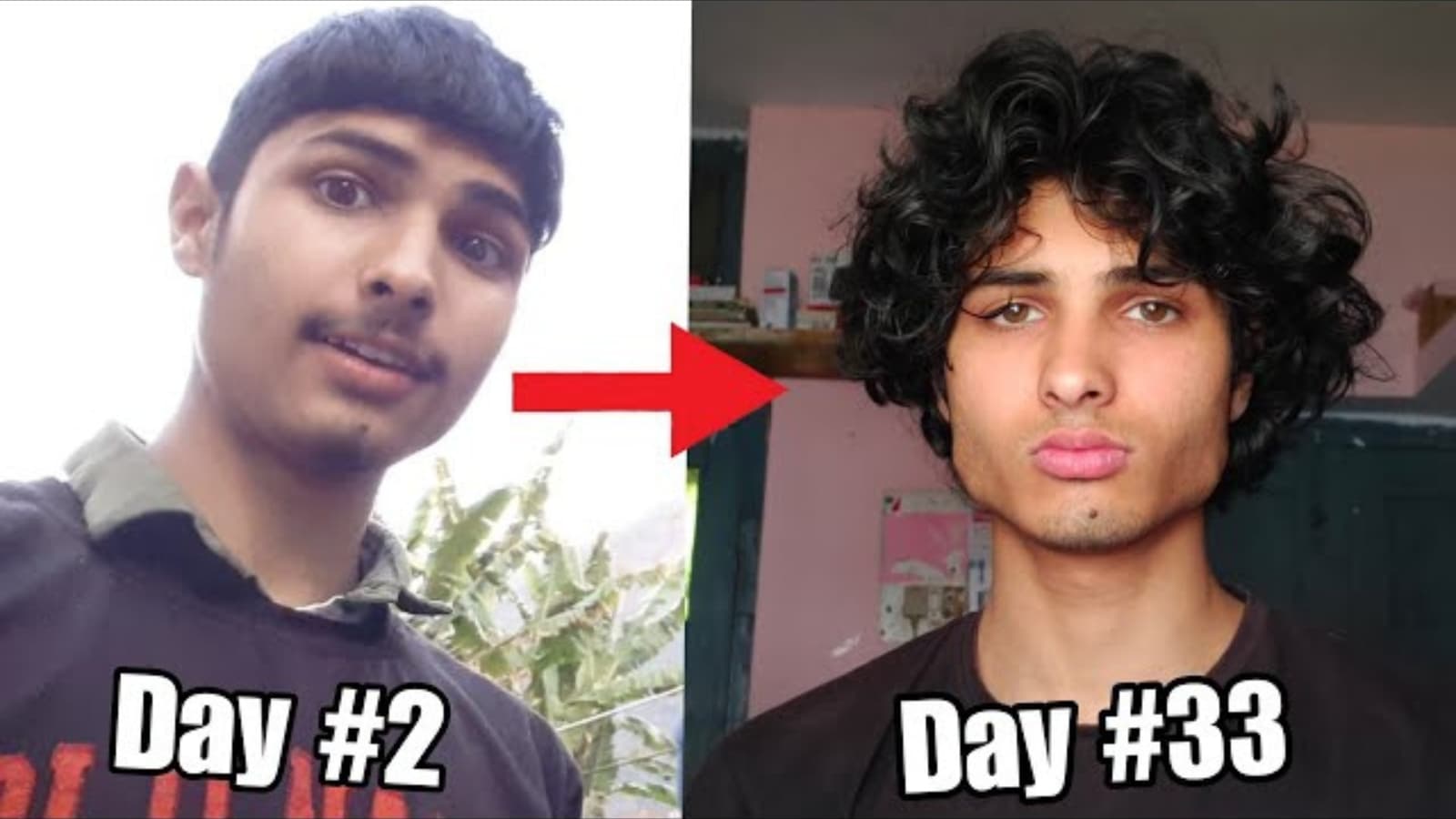
 The transformation of Ayush Bijlwan. (File)
Written by Vasudha Sharma
Eighteen-year-old college student Ayush Bijlwan dreamt of being a supermodel since childhood. He started working out at 15 to achieve the perfect cheekbones, jawline, and physique. “I would look at myself in the mirror 40 times daily,” says Bijlwan, who got drawn into online chatrooms on “looksmaxxing,” a trending advisory that helps young boys maximize their appearance and gain social acceptance. Now he runs his own YouTube channel focused on self-improvement.
The fad that became self-destructive
Looksmaxxing, which originated in 2015, surged in popularity in 2023 as a social media trend encouraging users to meet specific beauty standards through various routines. Young men were urged to eliminate facial fat, achieve ‘hunter eyes’ that slant upwards, develop a sharp jawline, and attain a lean face with high cheekbones and plump lips.
While looksmaxxing may seem harmless, promoting self-care and healthy habits, it can lead to severe body obsession. Some teens resort to steroid use, hair transplants, and even plastic surgery to alter their bodies drastically. Extreme cases involve self-harm measures like ‘bone-smashing,’ where individuals hit their jaws with blunt objects, believing their bones will adapt.
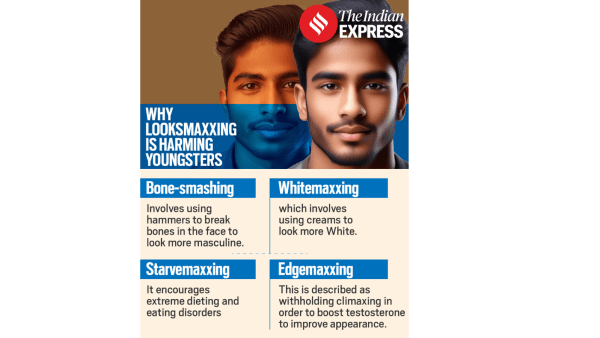 Looksmaxxing became popular in 2023 as a social media trend that encouraged users to achieve certain beauty standards through several routines.
Why body-corrective surgery can be a risk?
Dr. Ashwani Kumar Singh, a plastic surgeon at Yatharth Hospitals, Noida, sees many young people with body image issues pushing themselves to extremes. “What they don’t understand is that lower-limb lengthening surgeries are meant for accident victims, carry risks of complications, and require year-long healing.”
Most plastic surgeons prioritize counseling or talk therapy before considering cosmetic procedures. “I once had a 20-year-old student who thought he had a crooked nose. We informed him that no drastic changes would be made during surgery. Unsatisfied, he returned every month asking for corrections. Another patient sought surgery simply because his brother teased him about his nose.”
Counseling only way out
Dr. Kamna Chibber, from the Department of Mental Health and Behavioral Sciences at Fortis Healthcare, emphasizes that young people are particularly vulnerable regarding their social appearance in today’s visual world. “They should focus on building self-esteem and recognizing their unique strengths instead of making comparisons. Parents must watch for early signs of distress to prevent their child from gravitating toward self-harm,” she adds.
“Most of the time, the real issue is depression, obsessive-compulsive disorder, and body dysmorphia, where patients feel everything about their bodies is flawed. We do not perform surgery on patients with mental illnesses, as it could be counterproductive. Operating on such individuals can be dangerous because plastic surgeries can become addictive. In these cases, a psychologist should be consulted instead of a plastic surgeon,” says Dr. Dhir.
With celebrities and influencers normalizing surgery as a means to enhance appearance, many young people struggle to accept their natural looks. Dr. Anup Dhir notes a 20% increase in demand for surgeries among individuals aged 18-25 over the past 30 years. “A patient wanted a nose like Hrithik Roshan’s. We focus on correcting real deformities, not perceived ones. If their perception is significantly higher than reality, operating on such patients is not a risk worth taking.”
No responses yet