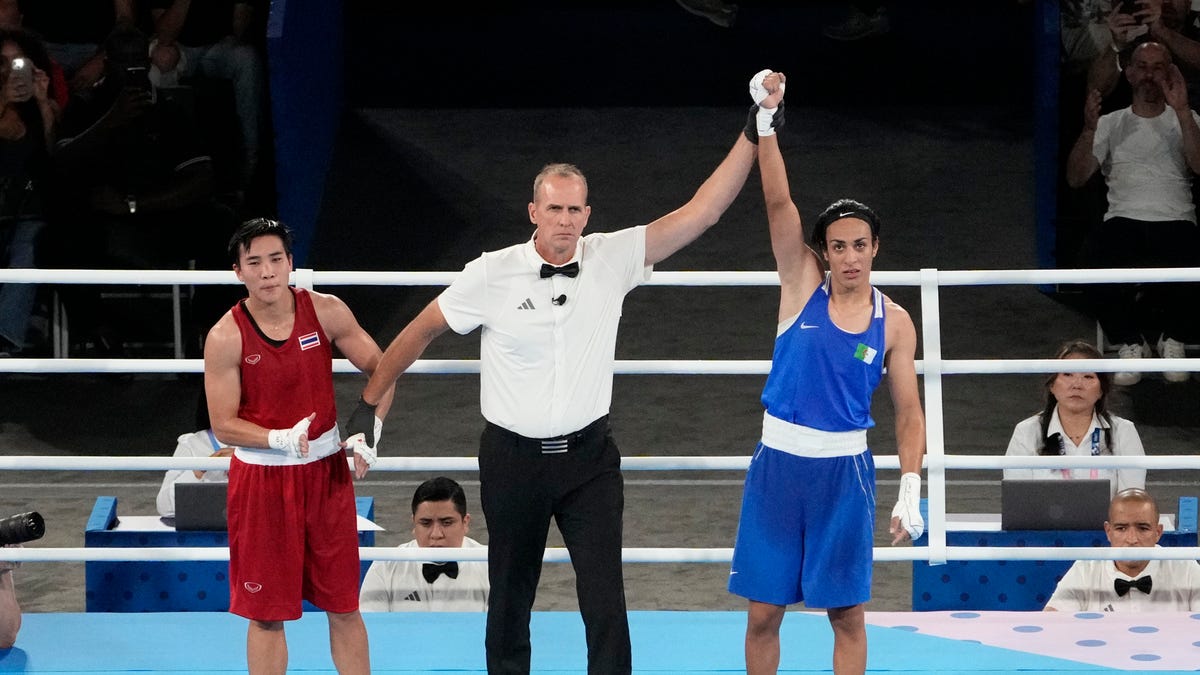
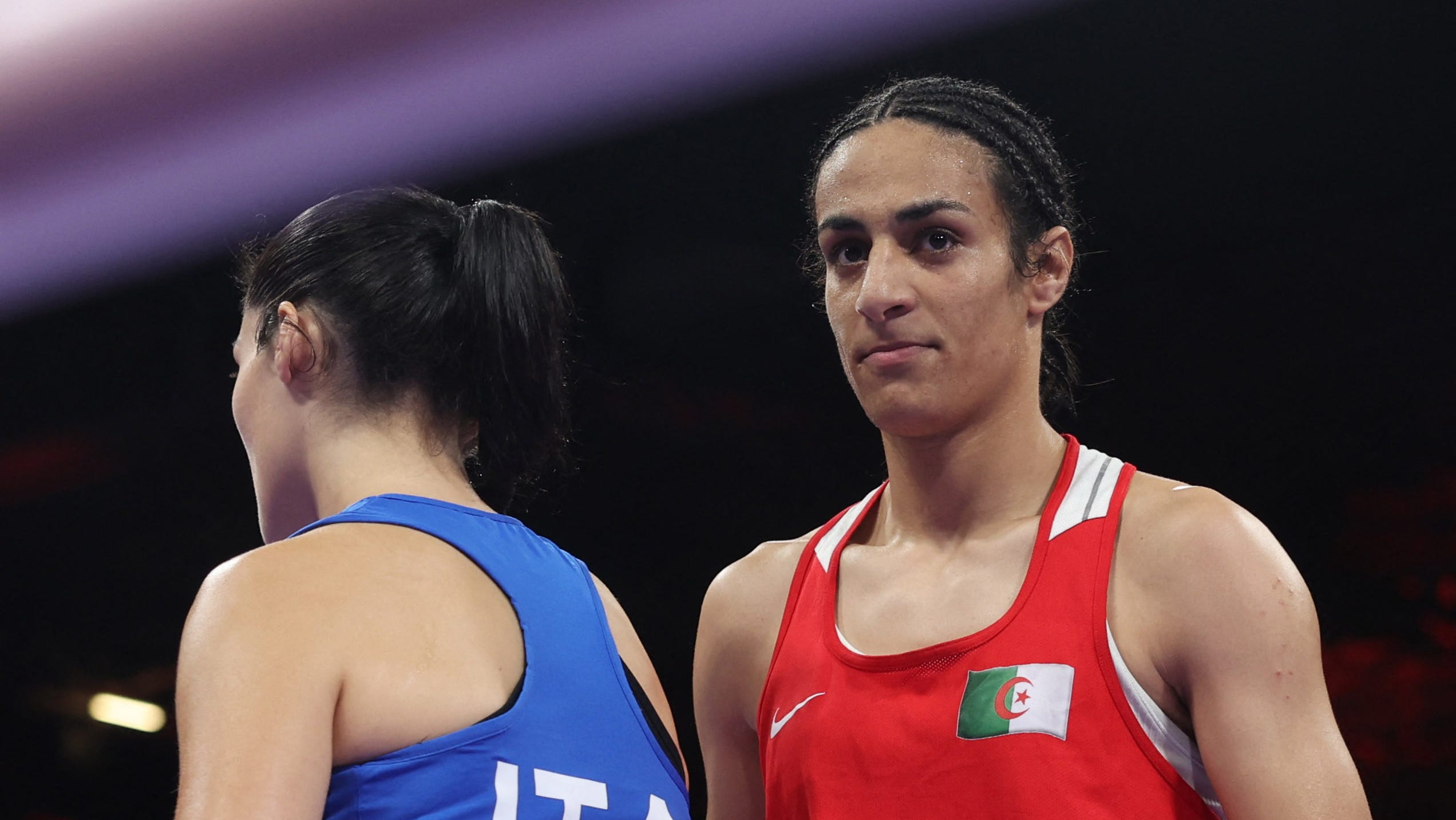
Algeria’s Imane Khelif won a women’s boxing match in just 46 seconds after her opponent, Italy’s Angela Carini, was unable to continue due to the severity of the punches she received. This incident sparked a wave of misinformation and speculation about Khelif’s gender.
Prominent figures, including JD Vance and J.K. Rowling, perpetuated the narrative that Khelif was secretly a man, leading to widespread public confusion.
The Boston Globe even erroneously referred to her as a “transgender boxer” in a headline, later issuing an apology. On Fox News, commentators labeled Khelif and Taiwanese boxer Yu-Ting as “biologically men.”
However, both Khelif and Yu-Ting are not transgender, but rather victims of a phenomenon known as “transvestigation,” which falsely claims that notable female figures are secretly transgender. Laurel Powell from the Human Rights Campaign explains that this trend is fueled by anti-trans sentiment and misinformation.
Imane Khelif’s Background
Khelif was born female and has competed in women’s boxing with the International Olympic Committee’s (IOC) approval. Despite having elevated testosterone levels, which can occur naturally in women, she has faced scrutiny and accusations that threaten her safety, especially given Algeria’s stance on gender-affirming care.
Understanding Elevated Testosterone
Claims that Khelif’s testosterone levels give her an unfair advantage are misleading. Research indicates that many cisgender women also have high testosterone levels, and transgender girls on puberty blockers have negligible testosterone levels that do not confer athletic advantages.
The Impact of Transvestigations
Lydia X. Z. Brown, a disability rights activist, highlights that “transvestigations” are rooted in transmisogyny, leading to invasions of privacy and exclusion for those perceived as transgender. Powell emphasizes that these attacks are driven by the belief that being LGBTQ+ is somehow wrong.
Intersectionality and Scrutiny
Brown draws parallels between Khelif and other athletes, noting that the scrutiny often targets cisgender Black women, revealing a nexus of anti-Black misogyny and transmisogyny.
Reclaiming the Narrative
The Paris Games mark a historic moment with equal representation of women and men among athletes. Khelif urges the public to uphold Olympic principles and refrain from bullying athletes, as it can have devastating effects on their mental health.
“This is a moment where we should be celebrating these women’s accomplishments and building up women’s sports,” Powell adds. Instead, misinformation continues to overshadow their achievements.
No responses yet