
The Healing Power of Art: Exploring Neuroaesthetics and Health Equity
In recent years, there has been a growing recognition of the connection between art, beauty, and well-being. This notion is propelled by the field of neuroaesthetics, which examines how engaging with art can influence our brains and overall health.
Lauren Blodgett’s journey illustrates this beautifully. Following her diagnosis with Takayasu’s arteritis, a serious autoimmune condition, she faced numerous challenges in her life as a law student. Blodgett shared, ‘I came back and spent eight months in and out of the hospital while balancing my caseload.’ The diagnosis took far too long, highlighting how many Americans struggle with elusive conditions.
The National Institutes of Health reports that approximately 25 million Americans are afflicted with similar mysterious diseases. This prompted researchers and health practitioners to explore innovative solutions beyond traditional medical approaches.
Your Brain on Art
In her pursuit of recovery, Blodgett embraced a holistic approach that included a focus on diet, nature, and dance. She stated, ‘Now I’m fully in remission. I’m not on any medication, and I haven’t been for over a year.’ This remarkable shift raises questions about the healing potential that art and beauty can offer.
Neuroaesthetics has gained traction as it unveils the scientific mechanisms behind the healing effects of art. Doctors in the U.K. have begun to prescribe art and dance as therapies for conditions such as Parkinson’s and depression.
Susan Magsamen, a key researcher in this field, noted that engaging in artistic activities results in the release of chemicals like serotonin and dopamine, enhancing mood and reducing anxiety. This implies the aesthetic sensibilities we cultivate are not just personal choices but vital to our health.
Recharge Rooms: The Power of Immersive Healing
Blodgett’s experiences inspired her to establish the Brave House, a nonprofit catering to immigrant girls needing legal and holistic support. The facility integrates art and movement into legal proceedings, fostering community and well-being.
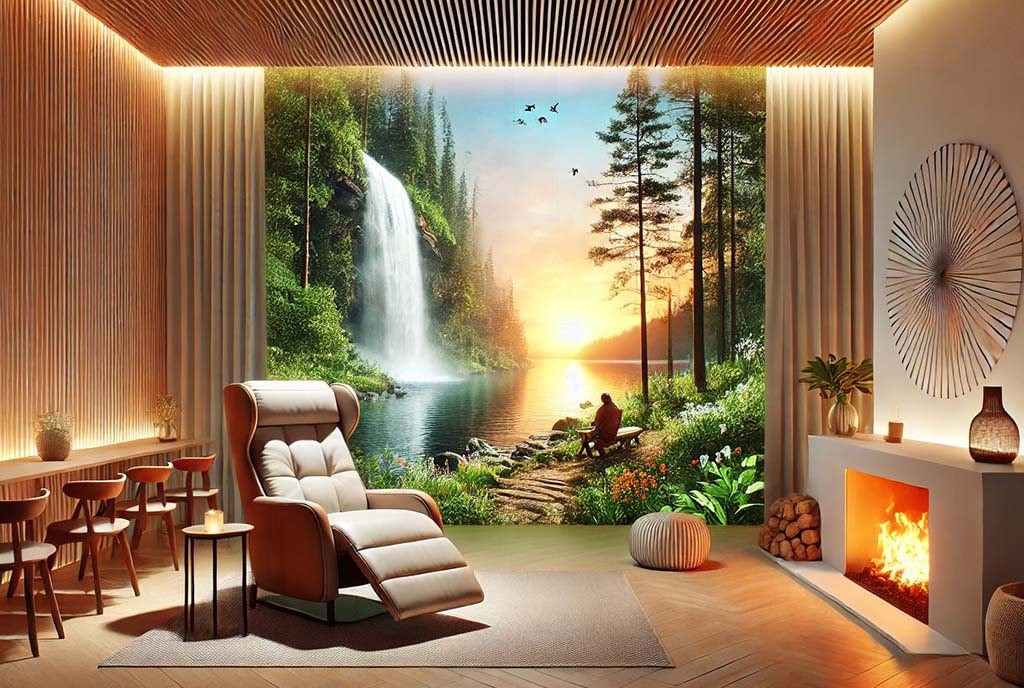
One innovative initiative is the creation of immersive healing spaces by a nonprofit called Applied Wonder. These spaces utilize nature projections alongside music and aromatherapy to create calming environments. Founder Jacob Marshall explains, ‘We try to create a moment that includes music and color and light.’ According to research, these spaces dramatically reduce stress levels.
Through innovative services like these, practitioners are starting to ensure that wellness practices are accessible to everyone, particularly in underserved communities.
Art as Medicine
Efforts like the CultureRx Initiative in Massachusetts advocate for integrating art into healthcare, and are crucial in combating mental health stigma. Chris Appleton, founder of Art Pharmacy, emphasized that, ‘Access to arts and cultural programming is an effective means of addressing mental illness, social isolation, and loneliness.’
These movements redefine healthcare, illustrating that creative options can profoundly affect health equity. Blodgett aptly summarized, ‘Sometimes the most powerful medicine is free.’ As creative practices become established in healthcare settings, our understanding of what constitutes medicine continues to evolve.
In summary, the intersection of art, science, and community offers transformative potential for health. Incorporating neuroaesthetics into our wellness approach invites not only personal improvement but a wider cultural shift towards holistic health.
Comments are closed