
Introduction
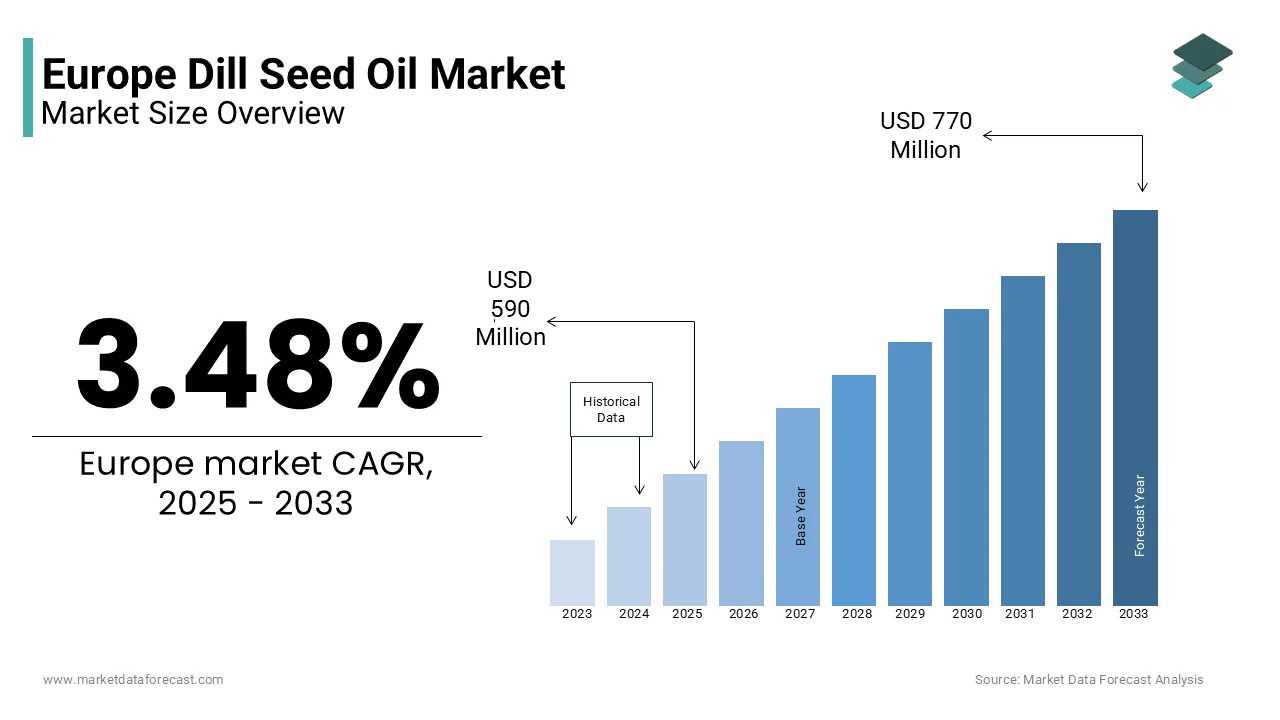
The Europe Dill seed oil market was valued at USD 570 million in 2024 and is expected to rise to USD 770 million by 2033. This rapid growth reflects a compound annual growth rate (CAGR) of 3.48% from 2025 to 2033.
Market Drivers
Growing Demand for Natural Ingredients
Consumer preference for natural and organic products significantly influences the Dill Seed Oil market. As health-conscious consumers seek alternatives to synthetic additives, the demand for dill seed oil, known for its flavor and health benefits, has surged.
Increasing Popularity of Aromatherapy
The rising interest in aromatherapy contributes to the demand for dill seed oil. Its calming properties make it popular among wellness enthusiasts.
Market Restraints
Regulatory Challenges
The complex regulatory landscape in the European Union presents challenges for manufacturers, particularly for smaller companies struggling to meet compliance costs.
Raw Material Price Volatility
Fluctuations in the price of dill seeds due to varying climate conditions and market demand can impact production costs.
Market Opportunities
Functional Foods
The increasing consumer interest in functional foods aligns with dill seed oil’s potential health benefits, presenting growth opportunities in this sector.
Natural Cosmetics Expansion
As the demand for natural cosmetic products grows, dill seed oil can play a key role in skincare formulations.
Regional Analysis
Germany leads the market, accounting for 25.3% share due to its strong food and beverage industry, followed by France and the UK. These countries are well-positioned for growth, with a focus on flavor and natural ingredients.
Conclusion
The European Dill Seed Oil market is poised for growth, driven by a shift towards natural products and increased consumer awareness. Companies need to navigate regulatory challenges and capitalise on emerging trends to thrive in this evolving sector.
Comments are closed