
The Importance of Supporting Employees During Ramadan
The month of Ramadan is a significant period in the Islamic calendar, during which around two billion Muslims worldwide observe fasting from dawn to dusk. As this holy month approaches, organizations are encouraged to prioritize the health and wellness of their Muslim employees, ensuring they feel supported during this time of spiritual growth.
Key Insights from International SOS
International SOS, a leading health and security risk services company, emphasizes the importance of prioritizing both physical health and mental wellbeing during Ramadan. Dr. Vikram Vora, Medical Director at International SOS, states, ‘Creating a supportive and inclusive environment for fasting employees is crucial during Ramadan. Organizations can demonstrate their commitment by promoting healthy practices such as eating balanced meals at Suhoor and Iftar, proper hydration, sufficient rest, and ensuring a healthy work-life balance throughout the holy month.’
Adjustments for Non-Fasting Employees
Organizations with employees traveling or working in Muslim-majority countries during Ramadan should also be mindful of local customs and traditions. Dr. Vora advises that businesses and government offices typically adjust working hours during this time. ‘In some regions, non-fasting individuals are expected to refrain from eating, drinking, or smoking in public during daylight hours,’ he adds. ‘Additionally, traffic can become particularly congested in the lead-up to Iftar, so planning journeys in advance is advisable.’
Five Key Tips for Supporting Employees During Ramadan
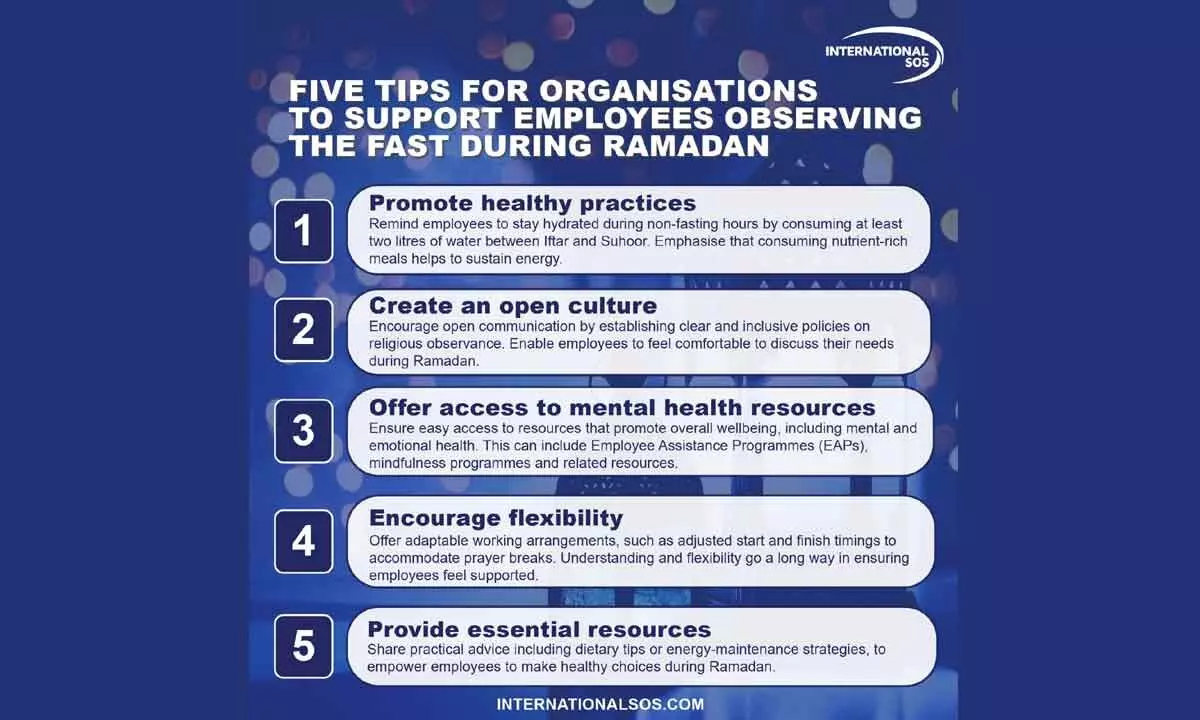
1. Promote Healthy Practices
Organizations should remind employees to stay hydrated during non-fasting hours by consuming at least two liters of water between Iftar and Suhoor, while emphasizing the importance of nutrient-rich meals.
2. Create an Open Culture
Encouraging open communication will help employees feel comfortable discussing their needs during Ramadan, fostering a respectful and supportive workplace.
3. Access to Mental Health Resources
Provide easy access to mental and emotional health resources, including Employee Assistance Programs and mindfulness resources, to promote overall wellbeing.
4. Encourage Flexibility
Offering adaptable working arrangements, such as adjusted start and finish times for prayer breaks, demonstrates understanding and support for employees during Ramadan.
5. Provide Essential Resources
Sharing practical advice including dietary tips and energy-maintenance strategies empowers employees to make healthy choices during Ramadan, showcasing care and commitment to their overall wellbeing.
Conclusion
By prioritizing employee health and safety, organizations can create a supportive environment during Ramadan, promoting inclusivity and ensuring business continuity while respecting the traditions of a significant cultural observance.
Comments are closed