Hormonal acne: It’s not just for hormonal teenagers.
While many associate breakouts with their teenage years, flare-ups can persist well into adulthood. According to the American Academy of Dermatology Association (AAD), acne is the most common skin condition in the U.S., affecting over 50 million Americans annually.
Despite its prevalence, misconceptions about acne abound. Experts indicate that many do not fully understand the causes of hormonal acne flare-ups.
According to board-certified dermatologist Hadley King, M.D., “Hormonal acne flares are typically not a sign of ‘hormonal imbalance.'” So, what causes hormonal acne?
How to tell if acne is hormonal
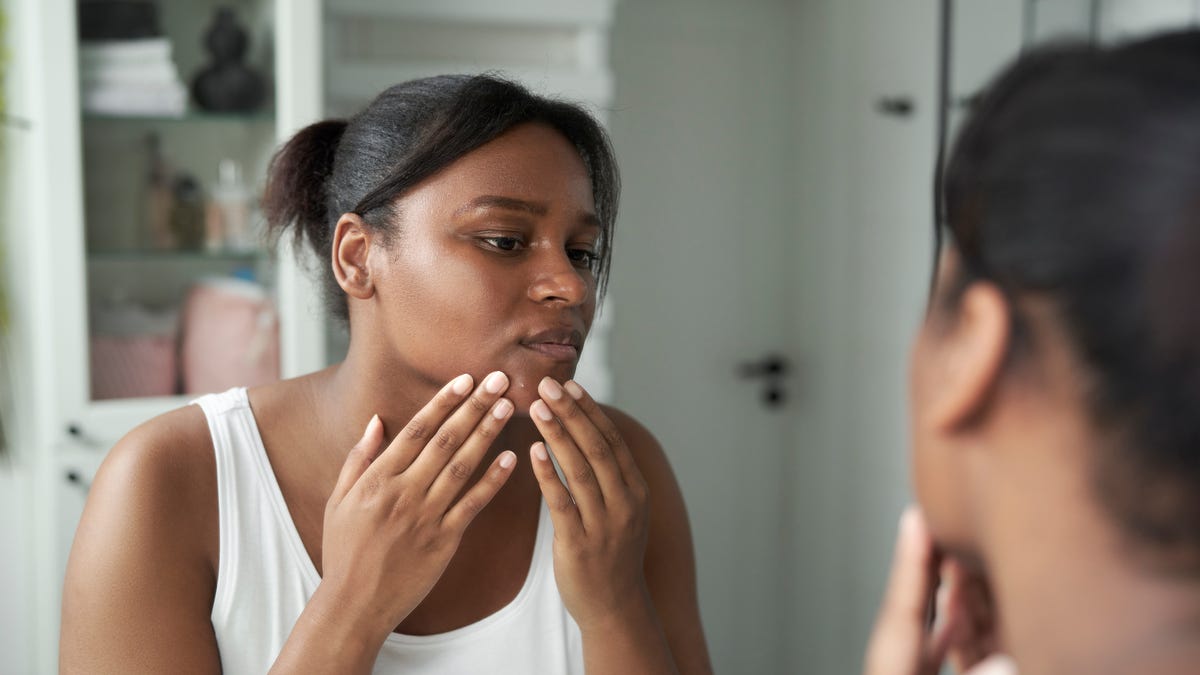
Anyone can experience hormonal acne, but it is most common among those assigned female at birth. You can often identify hormonal acne by its location along the chin and jawline or its timing with your menstrual cycle, as noted by the AAD.
As King explains, hormonal acne does not necessarily indicate a hormonal issue. “They result from the normal fluctuation of hormones,” she states. Some individuals have sebaceous glands that are genetically more sensitive to these hormonal changes, leading to increased acne during fluctuations. Factors like stress, diet, and sleep deprivation can also influence hormones and acne.
More: TikTokers are eating raw garlic to cure acne in viral videos. Does it actually work?
Research has indicated that transgender individuals undergoing gender-affirming hormonal therapy may also experience acne due to fluctuating hormone levels.
More: TikTokers are using blue light to cure acne. Dermatologists say it’s actually a good idea.
How to get rid of hormonal acne
Daily cleansing is the first step in managing any type of acne. Consulting a dermatologist can help determine additional treatments, such as tretinoin, retinoids, or benzoyl peroxide. If these options are ineffective, your dermatologist may recommend other treatments for hormonal acne:
- Clascoterone: This newer topical cream is the first FDA-approved hormonal acne medication for both men and women. It is believed to work by blocking skin hormones from producing excess sebum, which can clog pores and cause acne.
- Spironolactone: An oral medication commonly prescribed to women, often in conjunction with oral contraceptives to address hormonal acne. The AAD notes, “For women who have stubborn hormonal acne, this medication can effectively treat acne on the face, chest, and back.”
No responses yet