Health and Wellness Food Market: A Cornerstone of Nutritional Transformation
The health and wellness food market has experienced a remarkable transformation over the past decade, emerging as a cornerstone of the global food industry. As consumers grow increasingly aware of health, nutrition, and sustainability, their priorities shift towards food products that promote overall well-being.
Introduction
Health and wellness foods encompass products specifically designed to enhance both physical and mental well-being. These range from organic and natural foods to functional foods, dietary supplements, and fortified products. Increasing chronic diseases and a global shift towards preventative health care are significant contributors to this rising demand.
Today’s consumers are better informed about how their diet impacts long-term health and seek nutrient-dense options that are low in calories and free from artificial additives. The COVID-19 pandemic further accelerated this trend, emphasizing the importance of immunity-boosting and health-enhancing foods.
Market Size
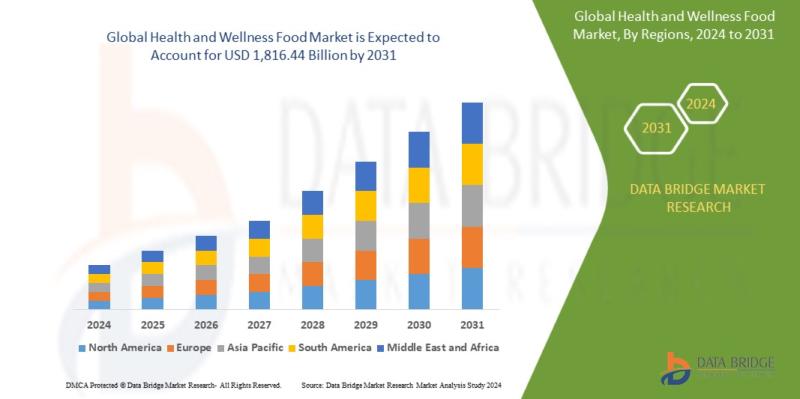
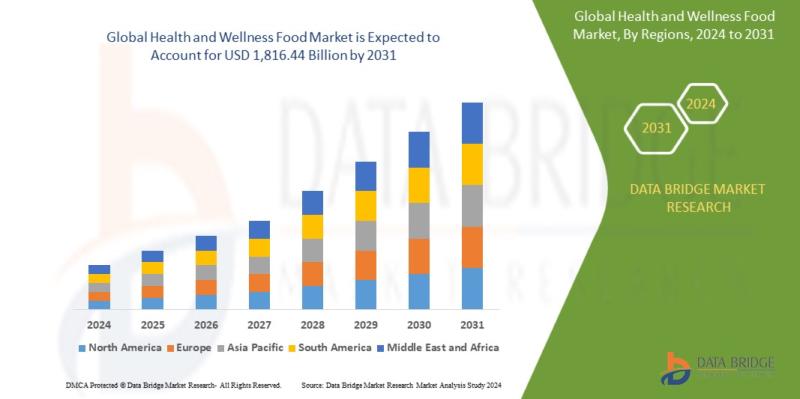
The global health and wellness food market was valued at USD 878.84 billion in 2023 and is projected to reach USD 1,816.44 billion by 2031, with a compound annual growth rate (CAGR) of 9.50% from 2024 to 2031. The market report features in-depth expert analysis covering market segments, geographical scope, key players, and consumer behavior.
Market Share
This diversified market includes key players such as Nestlé, Danone, Kellogg’s, General Mills, and Unilever, who leverage robust distribution networks and strong R&D capabilities. Organic foods make up approximately 40% of global health food sales, while functional foods, particularly those enriched with vitamins and probiotics, are gaining popularity, especially in urban areas.
North America and Europe together represent over 60% of market share, reflecting well-established health-conscious consumer bases. Meanwhile, Asia-Pacific and Latin America are emerging as potential markets for growth.
Opportunities and Challenges
Market opportunities arise from rising consumer awareness about the link between diet and health, technological advancements in food processing, and e-commerce growth. However, challenges such as high costs, regulatory complexities, and consumer skepticism about misleading claims may hinder growth.
Market Demand
The demand for health and wellness foods continues to rise, particularly among millennials and Gen Z, who favor clean-label, organic, and plant-based options. Urban areas present the highest demand due to busy lifestyles, while rural awareness is gradually increasing, leading to a growing market in those areas.
Trends
The market is notably influenced by trends like the plant-based revolution, personalization of nutrition, and a focus on gut health with probiotics. Additionally, sustainability and mindful eating practices are becoming increasingly important to consumers.
Conclusion
This dynamic health and wellness food market showcases key trends and opportunities reflecting changing consumer preferences in dietary habits. Understanding these developments can help stakeholders formulate effective strategies to leverage growth in this vital sector.
Comments are closed