
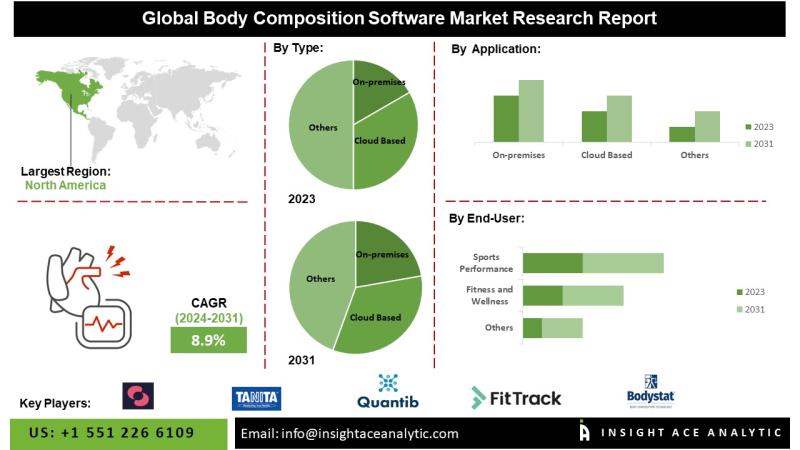
InsightAce Analytic Pvt. Ltd. has released a market assessment report on the “Global Body Composition Software Market” which covers various software types and applications including Fitness and Wellness, Sports Performance, and Healthcare.
Market Growth Projections
The global body composition software market is anticipated to grow at a compound annual growth rate (CAGR) of 8.9% from 2024 to 2031. This growth is being fueled by a global increase in obesity rates and a rising awareness regarding personal health and fitness.
Factors Influencing Growth
- Rise in obesity prevalence prompting demand for advanced body composition measurement.
- Increased number of health and wellness facilities offering personalized fitness assessments.
- Technological advancements improving the precision and user-friendliness of body composition software.
Moreover, the growing number of health and wellness facilities such as gyms and wellness centers has contributed significantly by promoting personalized fitness assessments.
Challenges Ahead
Despite the positive growth trajectory, the market faces challenges such as high costs of advanced software, lack of specialist training, and limited awareness in underdeveloped countries which may hinder overall growth.
Regional Insights
North America is projected to lead the market share due to its established corporate wellness programs, where a focus on employee health is increasingly prioritized. Europe follows with a solid market presence driven by innovations in body composition technology.
Key Players
Prominent players in the body composition software market include:
- Spren
- TANITA
- FitTrace
- ImpediMed
- Others
The body composition software market is poised for substantial growth through the integration of health monitoring technologies with an emphasis on user-centered innovation.
Comments are closed