
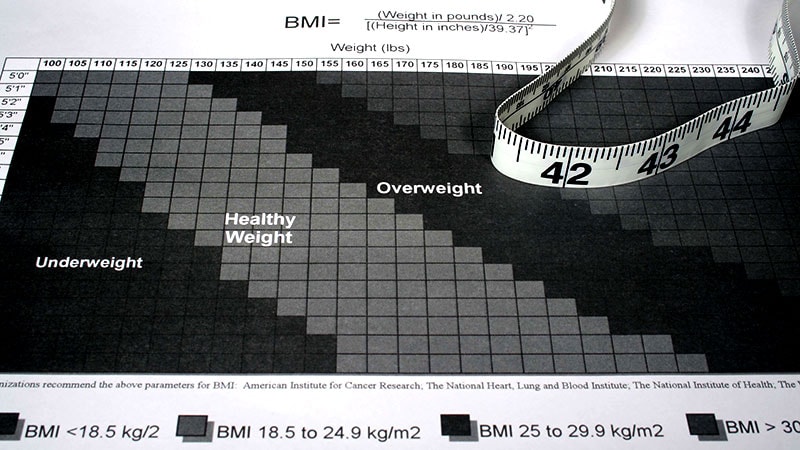
Body mass index (BMI) has long served as a standard metric for assessing individuals’ health based on their height and weight. Developed by an early Belgian mathematician, the formula gained attention when physiologist Ancel Keys popularized it in the mid-20th century. However, its application in current healthcare practices is increasingly scrutinized.
‘BMI was intended to categorize research participants, not to define health,’ said nutrition expert Brandy W. Root, RDN. Root explained that there is no evidence linking specific BMI values to health outcomes, questioning the medical community’s reliance on this single metric.
Body Composition Matters
A critical limitation of BMI is that it measures overall mass but does not differentiate between muscle and fat. While excessive body fat correlates with various health risks, increased muscle mass does not carry the same dangers. This oversight may lead to misclassifying individuals who have high muscle density as ‘obese.’ Root emphasized the flawed approach: ‘My patients in physically demanding jobs, often labeled as obese, are actually quite fit.’
Moreover, certain body shapes may influence health differently. For instance, research indicates that gynoid obesity, which is more prevalent in women, can provide protective health benefits. Yet, these subtleties escape the rigid BMI categorization.
The Obesity Paradox
Interestingly, certain studies suggest that a higher BMI may provide advantages for older adults. A meta-analysis published in the American Journal of Clinical Nutrition illuminated how, for individuals over 65, a BMI above 25 might actually reduce the risk of mortality.
Alternative Metrics
Given the shortcomings of BMI, professionals are exploring alternative methods for evaluating health. Techniques such as DEXA scans, while accurate, are costly. An emerging, practical option involves bioelectrical impedance analysis, which assesses body composition based on the speed of electric current traveling through different tissues.
Shifting Focus to Health Indicators
As the limitations of BMI become clear, healthcare providers are encouraged to incorporate a broader range of health indicators. Root stresses the importance of factors like exercise, blood pressure, and overall wellbeing. ‘My priorities lean toward health indicators rather than an arbitrary BMI number,’ she stated, advocating for a more compassionate approach to health assessment.
Comments are closed