
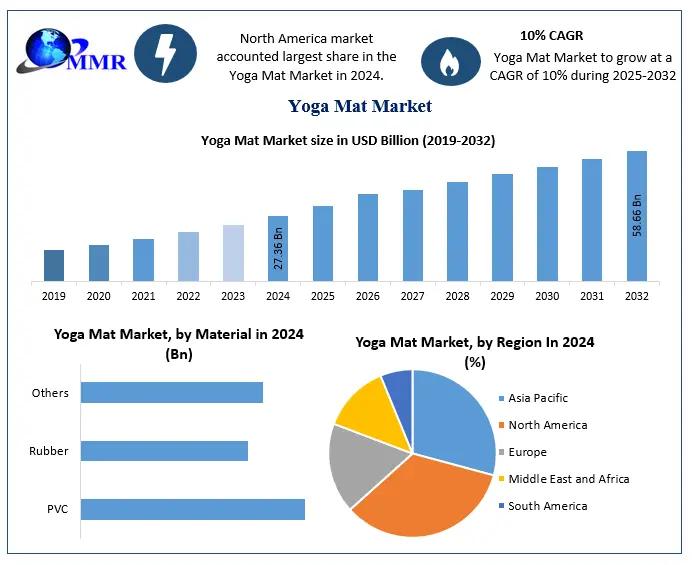
The Growth of the Yoga Mat Market
The global yoga mat market has been experiencing steady growth over the past decade. This growth is primarily driven by rising health consciousness, the increasing popularity of yoga as a lifestyle choice, and the expanding awareness surrounding mental wellness.
Once regarded as a niche product for specific wellness enthusiasts, yoga mats have now entered the mainstream market, appealing to a diverse consumer base, including professional athletes and busy professionals seeking mindfulness in their daily routines.
Market Valuation and Future Projections
The yoga mat market was valued at USD 27.36 billion in 2024, with expectations to grow at a compound annual growth rate (CAGR) of 10% from 2025 to 2032. This trajectory indicates that by 2032, the market could reach approximately USD 58.66 billion.
The Rise of Yoga as a Global Phenomenon
Yoga, originally an ancient Eastern spiritual practice, has evolved into a global fitness movement. Whether practiced in urban gyms or serene beach retreats, yoga is attracting enthusiasts from all walks of life. The recent integration of yoga into educational curricula, workplace wellness programs, and healthcare settings underscores its significance in contemporary well-being.
The pandemic accelerated yoga’s accessibility through online platforms and virtual classes, leading to a surge in home practitioners.
Material Innovation and Sustainability
Innovation within the yoga mat market has focused on enhancing grip, comfort, and portability while emphasizing eco-friendliness. Manufacturers are leaning towards sustainable materials such as natural rubber, cork, and jute. This shift is in response to consumer demand for environmentally-friendly products.
Furthermore, personalization options also play a key role in consumer preferences, with yoga mats now available in a plethora of colors, patterns, and even with motivational quotes or alignment guides.
Market Segmentation and Consumer Preferences
The yoga mat market can be categorized based on material, thickness, and consumer demographics. Beginners may lean towards thicker mats for additional cushioning, whereas seasoned practitioners might prefer thinner mats for better stability.
Premium segments are on the rise, with consumers showing willingness to invest in high-quality products. Meanwhile, affordable options remain crucial in developing regions where yoga is rapidly gaining popularity.
The Impact of E-Commerce
The rise of e-commerce has transformed the retail landscape for yoga mats. Direct-to-consumer sales models have made it easier for consumers to research and purchase mats online. Social media platforms have also significantly contributed to the promotion of yoga gear through influencer marketing and community engagement.
Challenges in the Market
Despite a positive market outlook, challenges such as intense competition, counterfeit products, and fluctuating supply chains pose risks for manufacturers. Maintaining product authenticity and consumer trust will be vital for brands moving forward.
The Road Ahead for the Yoga Mat Market
With wellness increasingly becoming a prioritized aspect of modern life, the yoga mat market stands poised for continued growth. Innovations in design, material, and digital engagement strategies will shape consumer choices. As the yoga mat transcends beyond just exercise equipment, it serves as a symbol of a healthier, more mindful lifestyle.
Comments are closed