
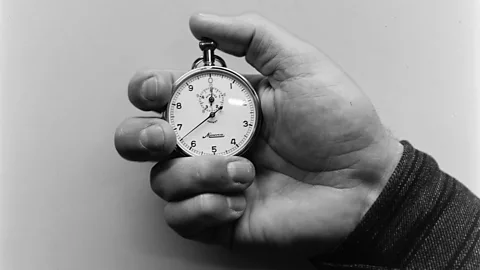
Understanding the Importance of Reaction Times
Your reaction times can reveal a surprising amount about what’s going on inside your body, from your brain health to your risk of an early death. Over the course of our lifetimes, our reaction times will slowly wane. It’s one of the reasons why athletic performance tends to decline from our 30s onwards.
Scientists are discovering that maintaining an average reaction speed can be a key indicator that our brain is still functioning well into our later decades. Reaction times can also provide insights into heart health and even overall mortality risk.
Simon Cox, a professor of brain and cognitive aging at the University of Edinburgh, notes, ‘Some people just tend to be faster than others, even before aging effects really kick in. However, a decline in reaction times probably indicates an accumulation of age-related degradation.’
How to Assess Your Reaction Time at Home
Do you wonder how you can gauge your reaction time in the comfort of your home? Here’s a simple method:
- Sit in a chair with your arm resting on a table, wrist hanging off the edge and thumb and forefinger facing up.
- Have a partner hold a ruler vertically over your hand, aligning the “zero” with your thumb.
- Without warning, your partner should drop the ruler, and you should try to catch it as fast as possible.
- The distance the ruler falls before you catch it measures your reaction time.
Performance levels can be categorized as follows: excellent (less than 7.5 cm), above average (7.5-15.9 cm), average (15.9-20.4 cm), and values over 20.4 cm are considered poor.
Understanding the Decline of Reaction Times
Population studies have noted a correlation between the decline in reaction times and the risk of age-related illnesses, linking slower reaction times with increased mortality risk from conditions such as coronary heart disease, stroke, and respiratory diseases.
Cox adds that a single measurement of reaction speed offers limited insight as it varies considerably among individuals due to factors like gender, genetics, fitness level, and lifestyle. ‘What’s crucial is tracking your performance over time and noting any declines,’ he states.
Factors Affecting Reaction Times
Our ability to react depends on a network of sensory systems, how well we can perceive stimuli, and the speed of our brain processing responses. As researchers have found, our physical ability to convert brain signals to actions declines with age.
According to studies, maintaining physical fitness can help preserve reaction times into older age.
Improving Your Reaction Time
There are proactive steps we can take to enhance or maintain our reaction times. Cox suggests engaging in activities that require quick responses can reinforce both mental and physical agility.
Staying active through sports, musical practices, and challenging cognitive tasks can psychically boost reaction times. Simple exercises like ‘dual-task training’—performing physical movements while engaging cognitive functions—are highly beneficial.
In conclusion, understanding and enhancing our reaction times can provide essential insights into our broader health. So, are you ready to test your reaction speed today?
Comments are closed