

A wellness vending machine is helping increase access to reproductive health products at College of the Redwoods.
According to a May 2024 Student Voice survey, approximately one in five community college students (19 percent) believe their institution should invest in wellness facilities or services to promote well-being. A recent pilot program across California is designed to remove obstacles to accessing health supplies for community college students.
The Wellness Vending Machine Pilot Program, funded by the state through Assembly Bill 2482, established in 2022, aims to enhance accessibility to preventive care products for college students. Funding has been allocated to 18 colleges to address students’ physical health and academic success through vending machines that dispense a range of health supplies including Band-Aids and birth control.
For institutions like College of the Redwoods, the vending machine serves as a primary source for personal care products on campus.
Community Colleges Striving for Change
Community colleges face significant budget constraints, impacting their ability to provide a comprehensive set of support services. A 2024 survey by the Richmond Federal Reserve of 80 community colleges across multiple states found only 3.8 percent offered on-site health services during the 2022-2023 academic year, with funding being a major obstacle to providing resources.
Katrina Hanson, manager of retention and basic needs at College of the Redwoods, applied for the vending machine grant in July 2023 to address a service gap in Eureka. The college had closed its Eureka student health center in spring 2023, shifting to tele-mental health services while acquiring three wellness vending machines: two for Eureka and one on the Hoopa Indian reservation campus.
‘It’s not a complete substitute for in-person care,’ Hanson said. ‘But it is more equitable for our students on our Hoopa and Crescent City campuses, as well as all of our online students.’
Machine Setup and Offerings
The three wellness vending machines were installed in August 2023, strategically placed in locations accessible to students at all hours. The program mandates that colleges stock these machines with various health products, including condoms, dental dams, menstrual cups, lubricants, and emergency contraception. College staff monitor demand and supply popular items based on student needs.
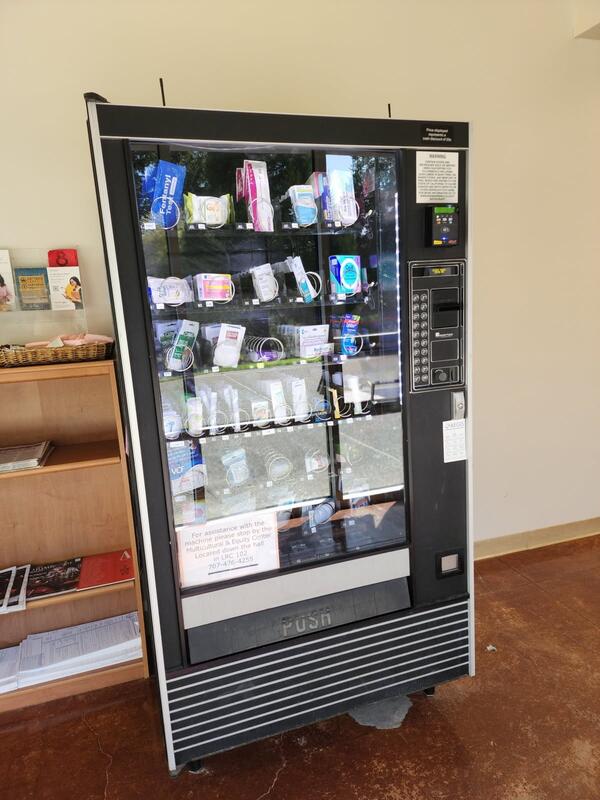
Katrina Hanson learned from students which items were in high demand, ensuring provisions such as pregnancy tests are always available, alongside free items like Band-Aids and discounted products like Benadryl.
The college rents the vending machines from a company responsible for maintenance, allowing the college to focus on supply procurement. The program’s funding will support the machines for five years, while the college budgets for supply replenishment.
‘We aim to make this initiative somewhat self-sustaining by experimenting with various product offerings,’ Hanson explained. ‘The grant allows health supplies to remain free or discounted, while other items are offered at regular prices to support the project financially.’
Feedback and Adjustments
In early assessments, two of the three machines were underutilized, prompting campus leaders to consolidate the offerings. This year, high demand products include condoms, menstrual cups, Narcan, and pregnancy tests. College staff have been adjusting supply pulls from local partnerships to keep costs minimal.
As the college prepares to reopen its student health center following renovations, the vending machines will continue to play a crucial role in supporting student health needs.
Have you implemented any wellness initiatives to enhance student success? Share your experiences with us.
Comments are closed