
Ancient Wisdom and Modern Wellness: Lessons We Can Learn
Wellness goes hand in hand with how we think. Our beliefs, perceptions, and thoughts all affect our health, mind, and body. As a society, we have long explored the inner depths of our minds to support our lives. While much remains to learn about modern civilization, valuable insights come from our past, especially from ancient wisdom and thought leaders who have helped shape our understanding of life, health, and well-being.
The wisdom held in our personal, cultural, and social histories can greatly impact our health and wellness. But are we truly listening to these lessons, and what can we learn?
Dr. Tim Crowley, a lecturer and assistant professor at the School of Philosophy, UCD, argues that presentism—the act of judging historical figures by today’s moral and ethical standards—can obscure valuable lessons. He refers to this trend as ‘TikTok history’, leading to calls for ‘pulling down statues or altering educational curricula to fit modern values.’
Crowley suggests that such reactions hinder our ability to learn from the past. ‘Learning should come from challenging both past and present while being aware of our cognitive biases,’ he remarks.
“Understanding that we too occupy a particular moment in history with our own blind spots should inspire a perspective on history driven by appreciation rather than resentment,’ says Crowley. This perspective allows us to gain insights into human nature and develop intellectual humility.
Looking to ancient wisdom encourages reflection on humanity, thought, and how these elements contribute to our mental wellness. Crowley, who specializes in ancient Greek philosophy, emphasizes inquiry, criticism, and self-reflective argument as key elements of insightful thinking.
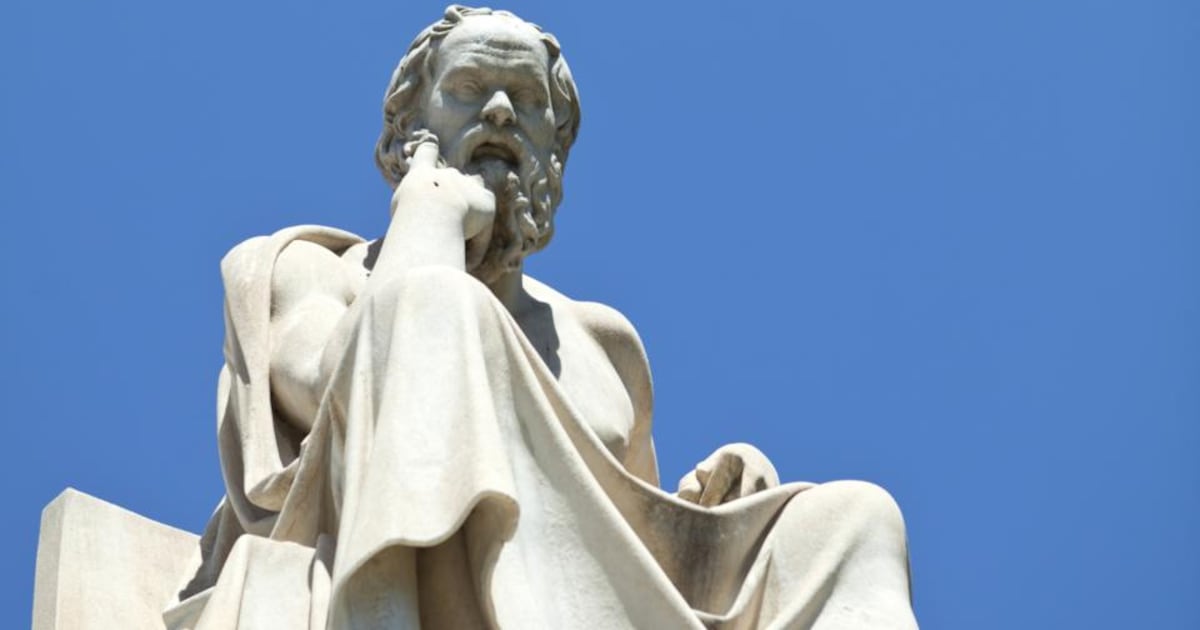
‘The exemplar of Greek wisdom is Socrates, who claimed that all he possessed was a partial and limited wisdom. Knowing the extent of his ignorance fueled his quest for truth,’ Crowley explains.
He continues, ‘What ancient Greek wisdom offers us is not merely maxims to memorize, but an invitation to engage critically and participate in intellectual discourse.’
However, ancient wisdom can also be misused for personal or political agendas. Crowley warns, ‘In the wrong hands, self-criticism can become toxic. Plato cautioned in his Republic that philosophy could be destructive if misapplied, particularly in the youth.’
These ‘mind viruses,’ as Crowley describes them, suppress genuine inquiry—an essential element of free speech and accountability.’
Ancient wisdom urges us to question and challenge established ideas. But is this practice prevalent in today’s society? Crowley argues that universities should be bastions of free inquiry, a legacy inherited from Socrates. However, he observes, ‘Today, many students find themselves in an echo chamber of homogeneous opinions, stifling critical thought.’
He adds, ‘Students are guided straight into the steam-room of unexamined ideas, where support for mental health issues continues to surge annually. This correlation is unlikely to be coincidental. Perhaps mental wellness requires opposition and resistance rather than safety to foster intellectual strength.’
Three Lessons from Ancient Wisdom
Intellectual Humility
In Crowley’s words, this entails ’embracing our fallibility.’ He underscores the Socratic notion that true knowledge begins with recognizing one’s ignorance, a fundamental step toward true understanding.
Intellectual Autonomy
‘This forms a healthy skepticism toward authority,’ Crowley explains. Ancient philosophers like Aristotle challenged prevailing thoughts, holding that even great thinkers like Plato should not be viewed uncritically.
The Importance of Freedom
Crowley notes that while the ancients recognized the need for physical freedom, true freedom also requires mental independence—freedom to question, explore, and express ideas without restraint.’
Comments are closed