
United Hatzalah Launches Israel’s First Psychotrauma Dog Unit
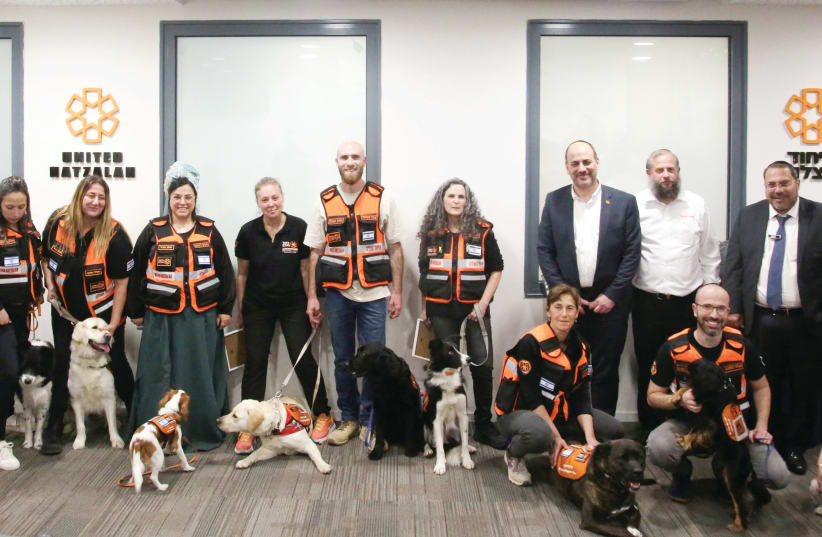
A volunteer’s soft voice and pat on the back don’t always calm people who have just been exposed to extreme events like a terror attack. Sometimes, it takes wordless encouragement and love, such as a wag of the tail and maybe a lick from a dog trained for psychotrauma support.
United Hatzalah, the volunteer-based emergency medical services organization providing free service throughout Israel, held an emotional ceremony recently at its headquarters in Jerusalem. This event marked the launch of the country’s first Psychotrauma Canine Unit.
This specialized unit operates on a fully voluntary basis, functioning 24/7 to provide emotional support at disaster scenes through trained dogs. Its mission focuses on offering immediate medical intervention during emergencies and giving essential support to individuals during their most challenging moments.
Eli Beer, the organization’s founder and president, stated, ‘The launch of the Psychotrauma Canine Unit is a major step in providing emotional support during emergencies. Our specially trained dogs help reduce anxiety and stress among victims, contributing to their recovery.’
Led by Dr. Batya Jaffe, an animal-assisted therapist, the unit’s training involved various scenarios, allowing dogs and handlers to cope with the stress of emergency situations.
The trained dogs assist victims by identifying increased anxiety levels, offering reassurance, and leading them to safe areas. Jaffe emphasized, ‘Our dogs know whom to approach; they can feel the stress of individuals in trauma.’
In addition, the recent study from Washington State University suggests that cats could also serve as therapy animals in different settings, further enhancing emotional support options.
United Hatzalah encourages interested volunteers to contact their headquarters for upcoming opportunities in joining this innovative initiative.
As stated by Prof. Ehud Davidson, the CEO of United Hatzalah, ‘We are proud to be pioneers in deploying psychotrauma dogs at disaster scenes and believe this model will find utility worldwide.’
Comments are closed