
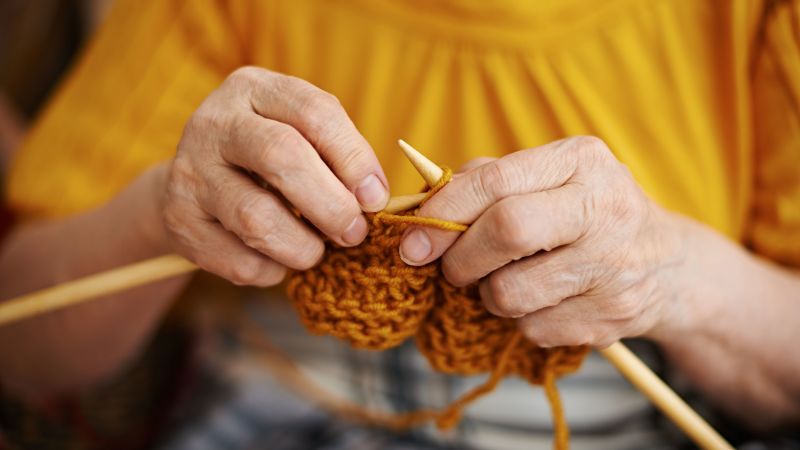
Walking into my grandmother’s house, I watch her hands move in a fast-weaving motion as stitches extend from her knitting needles. Beside her are layered stacks of knit blankets, scarves, and ponchos stitched with carefully selected color schemes and patterns made of wool yarn. She donates these blankets to children’s hospitals and foster homes.
Her favorite pastime is creating. She is always crafting, whether it’s knitting, coloring, scratch art, or most recently, dabbling in gem art. These activities provide her satisfaction and purpose in ways more fulfilling than work.
Family Influence on Creativity
She infused her love for arts and crafts into the rest of my family. My mom joined community theater groups when she became an empty nester and learned pour painting. My younger cousin photographs nature, and his father (my uncle) has a comedic podcast with voice actors. My twin brother and I sang in college — it kept us sane while balancing our heavy academic workloads.
Scientific Insights
Creating art reduces levels of cortisol, the body’s stress hormone, past research has shown (link).
“Engaging with arts and crafts is accessible and affordable. Options such as knitting and drawing require very few tools and can be engaging and creatively fulfilling activities,” said Dr. Helen Keyes, cognitive psychologist and head of the school of psychology and sport science at Anglia Ruskin University, via email.
Research Findings
Now, a new study by Keyes and fellow researchers has found that engaging in creative activities can significantly boost well-being by providing meaningful spaces for expression and achievement (link).
Although prior studies have shown that creating arts and crafting is therapeutic for people with mental health conditions, the general population has been understudied, according to the study, which published recently in Frontiers in Public Health.
Public Health Implications
The researchers suggested that arts and crafts could improve public health. “Governments and national health services might consider funding and promoting crafting, or even socially prescribing these activities for at-risk populations as part of a promotion and prevention approach to wellbeing and mental health,” Keyes said. “Engaging with crafting is something that is relatively easy to introduce into your life.”
Practical Tips
If you don’t think of yourself as artistic or creative, Dr. Frank Clark has four suggestions to tap into your creative side: Reframe your thinking to be optimistic about your creative potential; do not be afraid to take risks to try a new activity; foster relationships with people who are in a creative space that’s interesting to you; and think about what you did creatively as a child and do it again.
A cheap option for indulging in creativity is coloring. Although some may perceive coloring as an activity for kids, “I love adult coloring books and encourage everyone to embrace their inner child,” Clark said. “Coloring is an example of a mindfulness activity that has a multitude of health benefits. It can help foster social connection, improve concentration, and spur creativity.”
And when you’re creative, anything can happen. “Creativity has the power to foster resilience, restoration, and reconciliation,” he said. “It is a cathartic antidote that can help provide a sense of meaning and purpose for humanity.”
Comments are closed