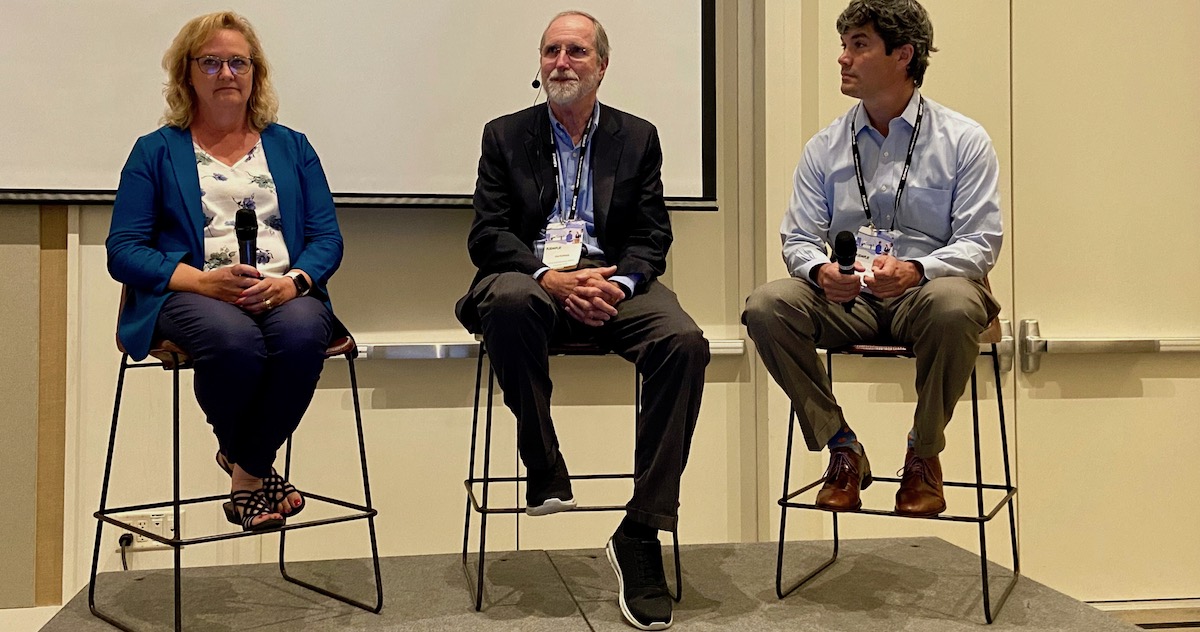
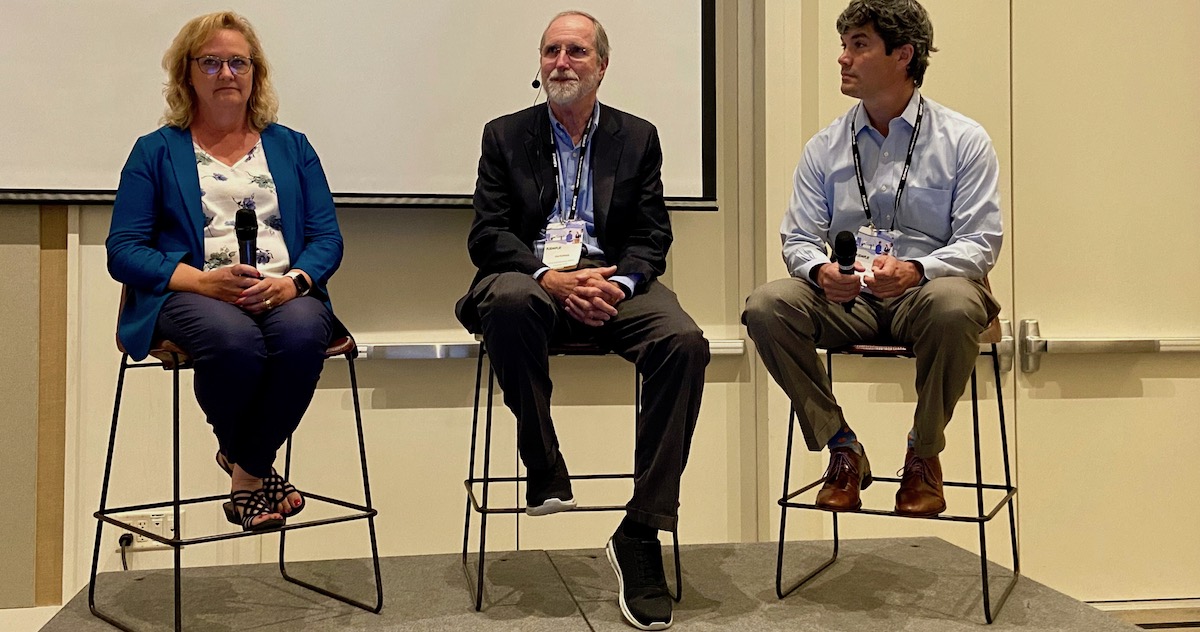
Health care leaders are increasingly turning to digital health solutions to enhance consumer access and engagement. On August 20, industry experts participated in a panel discussion focused on digital innovation aimed at improving employee health.
This panel was part of the launch event for the Plug and Play Northwest Arkansas Health Accelerator, held in downtown Bentonville. Over the past five years, the Sunnyvale, California-based venture capital firm has concentrated on supply chain investments and accelerators in Northwest Arkansas.
Approximately 125 attendees, including a dozen digital health and insurance startups from across the United States, gathered for the launch of the new health accelerator, which focuses on consumer health and self-insurance.
In the upcoming weeks, Plug and Play will announce the participants for the 12-week accelerator program. The launch event featured startup pitches, one-on-one sessions, discussions on market trends, and insights from industry leaders regarding new technologies to enhance employee health and wellness, improve healthcare affordability and access, and reduce healthcare costs.
During the panel discussion, moderated by Ryan Cork, executive director of health care transformation for the Northwest Arkansas Council, Marcus Osborne, executive chairman of New York City-based musculoskeletal health startup RightMove Health, emphasized the design challenges of the U.S. healthcare system.
“The system was not designed to drive real consumer engagement,” Osborne stated. “When you don’t get consumers to engage, you don’t get good outcomes.”
Osborne noted that companies, particularly in digital health, are striving to innovate to foster consumer engagement. Key challenges include healthcare affordability and accessibility, as well as simplifying care.
He mentioned that large employers have reported that healthcare costs are outpacing their earnings growth, making it their top expense.
Another challenge, according to Osborne, is to “reduce the friction that enables innovation and those who need the innovation to come together faster to reap the benefits of what’s available.”
Before joining RightMove, Osborne served as senior vice president of health transformation at Walmart, where he recognized that “people don’t know where to go when they’ve got an issue and aren’t getting the right answers…evaluation…diagnostics… They don’t know what’s really going on, and they’re not being put on the right care plan.” This realization led him to RightMove.
Cal Kellogg, chief strategy officer for Arkansas Blue Cross Blue Shield, shared that the company’s engagement in digital health began when it was one of the first in Arkansas to offer electronic claims submissions. Prior to the COVID-19 pandemic, they were exploring ways to enhance consumer access, particularly for those needing care outside traditional hours.
While demand for virtual healthcare surged during the pandemic, it has since stabilized for primary care, although the demand for virtual behavioral health services remains robust.
“What we’re looking at is how to leverage that and then start to integrate behavioral health with physical health to achieve whole-person care, as these components are still somewhat disconnected,” Kellogg explained. “We need to figure out how to approach things differently.”
He also mentioned that the company is collaborating with a startup to enhance access for behavioral health patients by allowing them to schedule appointments at their convenience. Additionally, scheduling virtual physical therapy appointments for musculoskeletal patients could help them avoid surgery.
Laura Wallace, director of total health for Fort Smith-based transportation company ArcBest, noted that the company is self-insured and self-administered, handling its health claims internally.
Over a decade ago, ArcBest initiated its wellness focus, believing that investing in wellness would lead to healthier employees. In 2017, they introduced on-demand physician services and second-opinion consultations. By 2019, they had launched virtual primary care, along with at-home screenings, musculoskeletal care, and increased access to behavioral health services. Annual employee surveys ensure that the care provided aligns with employee needs.
“One important aspect for us is that most of our digital health solutions come at no cost to the employee,” Wallace stated. “When discussing affordability and consistent care, these factors are crucial. During COVID, we eliminated some co-pays because we recognized that people were receiving necessary care through these solutions, and we maintained zero co-pay for them.”
Before the panel discussion, Julianne Roseman, principal of Health Ventures for Plug and Play, addressed trends in the healthcare industry, including insurance, regulatory changes, and consumer demands.
Roseman highlighted the growing popularity of self-insured plans among employers, which allow them to tailor the best plan for their employees. However, she cautioned that self-insurance carries risks, as employers must anticipate employee health costs.
Recent federal laws aim to facilitate consumer comparison shopping for health insurance, though the process remains complex. Another new initiative allows employers to allocate funds for employees to use on healthcare as needed.
Roseman noted that, following regulatory changes, employees have begun suing employers due to rising healthcare costs and stagnant wage growth. While employee health insurance premiums and prescription drug costs have increased, employers also face rising costs beyond their control.
She added that the Biden administration’s negotiations for price caps on the top 10 drugs covered by Medicare will influence the broader market, as these set prices will likely affect consumer willingness to pay more for medications.
Regarding consumer trends, Roseman observed that self-service and personalized care options are becoming more common. Consumers now have a variety of choices for receiving care, whether virtually or in-person, with options ranging from budget-friendly to premium services and treatments.
Comments are closed