
Eighty years ago, 1,000 Holocaust survivors, known as “Teheran Children,” arrived in British Mandate Palestine after a harrowing journey.
Just over 80 years ago, close to 1,000 Polish-born “Teheran Children” arrived in British Mandate Palestine after a long, circuitous, and tortuous journey from Iran. They were the first large group of Holocaust survivors to make it over here after being expelled from their native Poland to the USSR and enduring hunger, cold, disease, and untold existential challenges for four years before being dispatched by the Soviets to the Iranian capital.
From there, Jewish Agency workers sprang into action and sent them by ship, train, and on foot to Palestine. Local activists found homes for the children in kibbutzim, boarding schools, and Henrietta Szold youth villages.
After such a protracted traumatic episode, not all the youngsters were emotionally capable of adapting to life in the Land of Israel within normative frameworks. Thirty-four of them needed closer attention. Alert to their predicament, Henrietta Szold, founder of Hadassah, the Women’s Zionist Organization of America, contacted the B’nai B’rith office in Jerusalem and asked for help.
She duly got that from the B’nai B’rith Jerusalem Lodge that agreed to house the fragile children on the second floor of the Beit Hannah Hostel on Ethiopia Street in downtown Jerusalem, in the care of experienced childcare professionals headed by Yehuda Dux. This led to the establishment, in 1943, of the Children’s Home.
What is the Jerusalem Hills Therapeutic Centers?
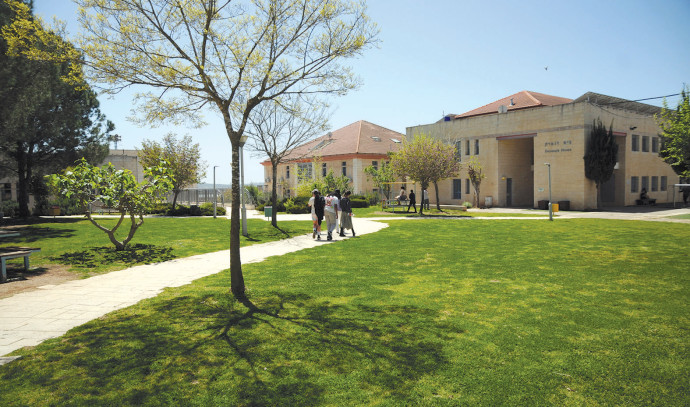
That was the catalyst for what eventually became the Jerusalem Hills Therapeutic Centers (JHTC), on the outskirts of Abu Ghosh. It follows previous incarnations and offshoots, in Bayit Vagan and Gilo, in working to rehabilitate traumatized immigrant and Israeli children and youth and help them integrate into mainstream Israeli society.
Some of the milestones in that fourscore-year journey are displayed on the upper floor of the main building at the Abu Ghosh campus in an evocative and emotive exhibition of prints, devised by Orna Ben-Shitrit Raz and her husband, Museum of Eretz Israel photography curator, Guy Raz.
The collection does a good job of conveying the ambiance, dynamics, and milestones of the organization’s timeline to date. That is very much down to the caliber of the snappers.
“The early photographers who documented the institution were among the best photographers of the day,” the curators say. “The home where the first children lived on Ethiopia Street, in 1943, was captured by Zvi Oron.”
How does the JHTC support children?
At any one time, there are around 100 children and youth, aged six to 15, in care at Abu Ghosh, largely referred there by the Social Welfare Ministry. “We are categorized as a post-hospitalization boarding school,” Gur Peleg explains. “Some of the children come to us after [psychiatric] hospitalization, and some come to us instead of being hospitalized. All the children who come here suffer from severe psychological damage, which is a result of what they experienced in their earliest years.”
The remedial and care philosophy behind the place is called Therapy in Life Space, devised by Chezi Cohen, a German-born psychoanalyst who ran the home for four decades, and after whom the Abu Ghosh campus is now named.
Part of the therapeutic approach involves providing the children, who have been through so much and spent their formative years feeling unloved and neglected, with a well-structured daily schedule.
“Each dormitory has 12 children. They live, eat, and do everything else together, and they go to school together,” Gur Peleg says. Presumably, that engenders something of a team spirit and helps the children develop friendships and relationships, something they sorely lacked before they got to the JHTC.
What challenges do the staff face?
The institution is heavily staffed with therapists, caregivers, teachers, and other employees who are very much hands-on with each and every child. The accent is on developing close supportive relationships and fostering a sense of trust. These are children who generally arrive at the institution after experiencing abuse – emotional and physical – and who view the world around them as threatening and downright frightening.
“We want the children to feel we respect them, and to provide them with a place that is comfortable and pleasant,” says Gur Peleg.
Noting the plural form of the institution’s name – Jerusalem Hills Therapeutic Centers – I was enlightened by executive director Noa Haas, a psychoanalyst. “The amuta (nonprofit) has a children’s home, and we have a therapy and training center which runs various courses.”
“And there is now also a psychotherapy course for haredim,” Gur Peleg pipes up. “That is revolutionary.”
Looking toward a curative end
“We see ourselves as a body that disseminates our know-how. And we have an outpatient clinic for ambulatory care for children and youth,” Haas adds. That’s quite a purview.
Even so, Haas says that not all the children and youth in their care leave the institution fully equipped to cope with the outside world. “Unfortunately, some have to leave mid-process because they reach an age when they can no longer stay here.”
For Haas, it is all about taking the children as individuals and following their progress as closely as possible, from the outset.
THE RELATIONSHIP with the parents is also of great importance. Parents – although not all – go to Abu Ghosh every week to spend time with their children and sit with social workers and other members of staff. They get a progress report and are kept on board with the arduous process of helping the children get up to speed socially, emotionally, and academically.
“Unfortunately, there are quite a few children who don’t have anywhere to go,” says Haas. “We have a rota system with the managers and other employees. We are open 365 days a year.”
No effort is spared to make sure the children get the attention and care they need and can feel safe and secure. Nur Peleg says there are 17 caregivers and other professionals for every dozen children.
The system has borne rewarding fruit over the years, with around 70% of JHTC alumni going on to find their place in Israeli society. That requires great effort and, naturally, financial investment. Donations are always gratefully accepted.
“We don’t always succeed,” says Gur Peleg. “There are children we can’t help, unfortunately, but we do our best to give them the care and support, and a sense of security, which hopefully offer them a better brighter future.”
For more information: childrenshome.org.il/en/
No responses yet